 Ends in 1h 06m
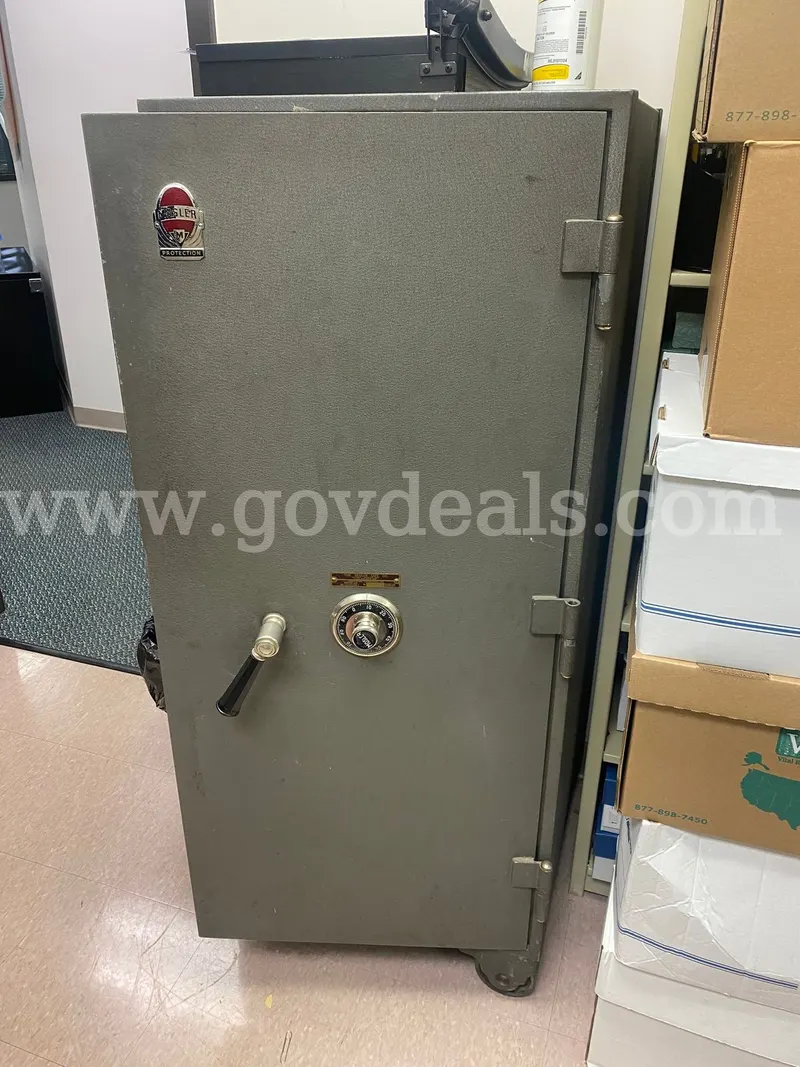
The Mosler Safe Co. Safe
$390.00/unitGovDeals
Ends in 1h 06m Ends in 1h 07m
 Ends in 1h 09m
Last reviewed
The words that come up when you buy liquidation pallets, manifest, buyer’s premium, salvage grade, cost per unit, FOB, in plain English. 30 terms, each with one crisp definition and a note on why it matters before you bid. Facts only; BStalker never tells you a lot is a good deal.
Customer returns are items shoppers sent back to a retailer, for any reason, from a changed mind to a genuine defect, then bundled into liquidation lots instead of being restocked and resold as new.
Because the return reason is rarely recorded per item, a returns lot mixes untouched product with damaged or incomplete units. The working rate you assume, how many power on or arrive complete, drives the real cost.
Overstock is brand-new, unsold inventory a retailer or manufacturer clears to free up warehouse space, excess seasonal buys, discontinued lines, or over-ordered SKUs, sold by the pallet or truckload at a fraction of wholesale.
Overstock is usually the cleanest condition tier, new-in-box, never handled by a shopper, so it carries less defect risk than returns. The trade-off is that the most in-demand items rarely end up as overstock.
A shelf-pull is merchandise physically removed from a store shelf while still in sellable condition, usually to make room for new-season stock or a planogram reset, rather than because a customer returned it.
Shelf-pulls sit between overstock and returns on condition: original packaging is common, but items may show shelf wear or minor cosmetic handling. Apparel and beauty lots are frequently graded shelf-pull.
Closeouts are the final run of a discontinued product a retailer or brand sells off in bulk to exit the line entirely: end-of-life SKUs, packaging changes, or a category the store is dropping.
Closeout stock is typically new condition but no longer replenished, so a lot is a one-time supply. That makes closeouts good for a single resale push and poor for a product you want to restock and reorder.
Reverse logistics is the supply chain that moves goods backward, returns, overstock, and recalls flowing from shoppers and stores back toward the manufacturer, and liquidation is the final stage where that inventory is sold off in bulk.
Understanding reverse logistics explains why liquidation inventory is unpredictable: it is whatever the forward supply chain rejected, aggregated by third parties. The pallets you buy are the tail end of that flow.
A liquidation broker is a middleman who buys surplus and returns from retailers in bulk, then breaks and resells it as pallets or truckloads to smaller buyers: adding a margin in exchange for smaller, more accessible lots.
Buying from a broker usually costs more per unit than sourcing direct from a retailer’s own liquidation channel, but the entry barrier is far lower. Many independent platforms in the directory operate as brokers.
Condition grades are a seller’s shorthand, commonly A through D, or labels like new, like-new, used, and salvage, summarizing the expected state of a lot, from unopened retail product down to damaged or non-working.
Grade definitions are not standardized across platforms, one seller’s Grade B is another’s Grade C, so read each platform’s grading key rather than assuming. Treat the grade as a starting estimate, then confirm with the manifest and photos.
Salvage grade is the lowest liquidation condition tier: items that are damaged, incomplete, non-working, or otherwise not sellable as functional retail product, priced accordingly and bought for parts, repair, or scrap value.
Salvage lots carry the deepest discount and the highest skill requirement. The value is in refurbishment or harvesting components, not in reselling as-is. Assume most units need work before they can move.
“As-is, where-is” means the lot is sold in its current condition with no returns, warranty, or guarantee, and the buyer arranges removal from the seller’s location, so you accept whatever arrives, sight-unseen risk included.
Almost every liquidation lot is sold as-is; there is no recourse if the contents disappoint. This is why the manifest, condition grade, and photos are the only protection you get before bidding.
Untested returns are returned items the liquidator has not powered on, inspected, or verified, graded on return status alone, so functional and defective units sit together in the same lot at the same price.
“Untested” is a warning, not a quality grade. It means the risk of non-working units is entirely yours to price in. Electronics lots are where this label matters most.
A manifest is the seller-provided itemized list of everything in a liquidation lot, typically brand, model or SKU, quantity, condition, and stated retail value for each line, attached to the listing before you bid.
A manifested lot lets you value the contents before committing; a blind or unmanifested lot does not. Manifest quality varies by platform: the directory notes which sources manifest at the item level.
A lot is the physical bundle of goods sold as one unit; a listing is the single web page, with its manifest, photos, condition, and bidding, that offers that lot for sale.
One listing sells exactly one lot. The distinction matters when you aggregate across platforms: BStalker tracks listings and links each back to its source, but the lot itself only ever exists on the origin marketplace. You browse the listing here and bid on the lot there.
A pallet is the standard unit of liquidation inventory, a wooden or plastic base stacked and shrink-wrapped with merchandise, sold as one lot, typically holding dozens to hundreds of items depending on their size.
“Pallet” is often used loosely to mean any mid-size lot, but freight is priced on the physical pallet’s weight and dimensions. Browse live pallets across nine platforms in the feed.
A case pack is a factory-sealed carton of identical units, one SKU, one size, a fixed quantity per case, sold as the smallest wholesale increment, smaller and more predictable than a mixed returns pallet.
Case packs suit buyers who want a known quantity of one product rather than a grab-bag, which is common on fixed-price wholesale sources. The trade-off is less upside than a mixed pallet’s occasional high-value finds.
A gaylord is a large, pallet-sized bulk shipping box, roughly a cubic yard, used to move loose, unsorted, or bin-store-bound liquidation merchandise, often sold by weight rather than by an itemized manifest.
Gaylord loads are usually the least-sorted, lowest-cost inventory tier. You are buying volume, not specific items. Bin stores and by-the-pound resellers are the typical buyers.
A mystery box or mystery pallet is a lot sold with no manifest and no contents disclosed, so you are buying the seller’s word on category and value alone, trading all visibility for a lower headline price.
Mystery lots carry the highest risk in liquidation because you cannot value what you cannot see, and they attract the most inflated retail claims. Experienced buyers generally avoid them or treat them as a gamble, not a strategy.
A truckload, or full truckload (FTL), is liquidation inventory sold by the entire trailer, often two dozen or more pallets, the largest and lowest per-unit-cost buying tier, and the one that demands the most storage and capital.
Truckloads deliver the deepest discount per item but require a dock or forklift, real warehouse space, and the cash to buy in bulk. They are usually a step up from pallet buying, not a starting point.
LTL, or less-than-truckload, is freight shipping for loads too big to parcel-ship but too small to fill a trailer, where you pay for the space your pallets occupy and share the truck with other shippers’ goods.
Most single-pallet liquidation purchases ship LTL, and the quote depends on weight, freight class, and distance, which is why it can swing widely lot to lot. Get the freight number before you bid, not after you win.
FOB, short for “free on board,” marks the point where ownership and shipping responsibility pass from seller to buyer, so FOB origin means you own and pay to ship the lot from the seller’s dock onward.
Most liquidation lots are FOB origin, so freight from the seller’s warehouse to you is your cost and your risk. That freight is exactly why landed cost, not the bid, is the number that matters.
A buyer’s premium is an extra percentage the auction platform adds to your winning bid as its fee, a fixed rate set by the platform, charged on top of the hammer price before taxes and shipping.
Because the premium is calculated on your bid, it raises your all-in cost-per-unit above the number you actually bid. The directory lists each covered platform’s buyer premium so you can factor it in before bidding.
MSRP recovery is what you pay for a lot expressed as a percentage of the manufacturer’s suggested retail price of its contents: a pallet of goods listed at $10,000 retail, bought for $1,000, is a 10% recovery.
Resellers use MSRP recovery to compare lots of different sizes on one scale, but it is only as trustworthy as the seller’s stated retail values, which can be inflated. Treat it as a rough ceiling, not a promise of resale value.
Landed cost is the all-in price of getting a lot to your door, the winning bid plus buyer’s premium, freight, taxes, and any handling fees, the true total you should measure a lot against.
A low bid on a freight-heavy pallet can cost more landed than a higher bid that ships cheaply, so comparing bids alone is misleading. BStalker computes cost-per-unit from bid plus freight where the platform quotes it. Add the buyer’s premium to get to the full landed number.
Cost per unit is the landed cost of a lot divided by the number of sellable items in it, the single number that lets you compare a small pallet and a full truckload on equal footing.
It is the metric most resellers optimize, because two lots at very different prices and quantities are only comparable once you divide down to the per-item cost. See it computed on live lots in the sample feed: from bid plus freight where the platform quotes it.
Sell-through rate is the share of a lot’s units you actually resell within a given period, versus what stays unsold: the number that decides whether a low per-unit cost turns into real resale revenue.
A cheap pallet with poor sell-through can lose money while a pricier one with fast sell-through wins: the manifest mix, condition, and demand drive it. BStalker does not measure or predict sell-through. The % of retail it tracks is what winning bidders pay, not what buyers later resell; that judgment stays with you.
A reserve price is a hidden minimum the seller will accept for a lot, if bidding closes below it, the lot does not sell even though it had the highest bid, protecting the seller from an under-value sale.
Not every auction has a reserve, and when one does the amount is usually not shown. You only learn you missed it when the lot goes unsold. Reserves are more common on higher-value truckload lots.
A proxy bid is a maximum amount you set in advance, letting the platform bid on your behalf in small increments up to that ceiling, so you win at the lowest price needed rather than your full maximum.
Proxy bidding is the default mechanism on most liquidation auctions, so entering your true maximum once is usually smarter than manually re-bidding. The catch is that a competing proxy can push you to your ceiling in seconds.
A soft close, or anti-sniping, automatically extends an auction’s end time by a few minutes whenever a bid lands in the final moments, repeating until bidding truly stops, so a last-second snipe cannot steal a lot uncontested.
Soft-close rules mean an auction’s posted end time is a floor, not a guarantee. A hot lot can run well past it. Plan for the extension rather than relying on a precise closing minute.
A bin store is a retail shop that buys liquidation pallets and gaylords, dumps the loose merchandise into bins, and sells it at a single flat price per item that drops each day through a weekly restock cycle.
Bin stores are a common resale outlet for the least-sorted, lowest-cost liquidation inventory. Buy by the gaylord, sell by the bin. The model turns on foot traffic and fast turnover rather than per-item margin.
A resale certificate is a state-issued document proving you are a registered reseller, letting you buy inventory tax-free for resale, and nearly every wholesale liquidation platform requires a valid one to open a buyer account.
Public government-surplus auctions like GovDeals are the main exception. They sell to the general public without a certificate. Each source page in the directory lists its exact registration requirement.
A sectional is a modular sofa built from separate connected pieces, described by the footprint it forms: an L-shape turns one corner, a U-shape wraps three sides, and an E-shape adds a center seat or chaise.
Sectionals are among the highest-value furniture lots in liquidation, but the shape and piece count drive both resale price and freight cost. Track sectionals and other furniture lots in the furniture category feed.
Now put the vocabulary to work. See real current lots from all nine marketplaces, no account needed.
See the live feed →Free account, no card: create yours